
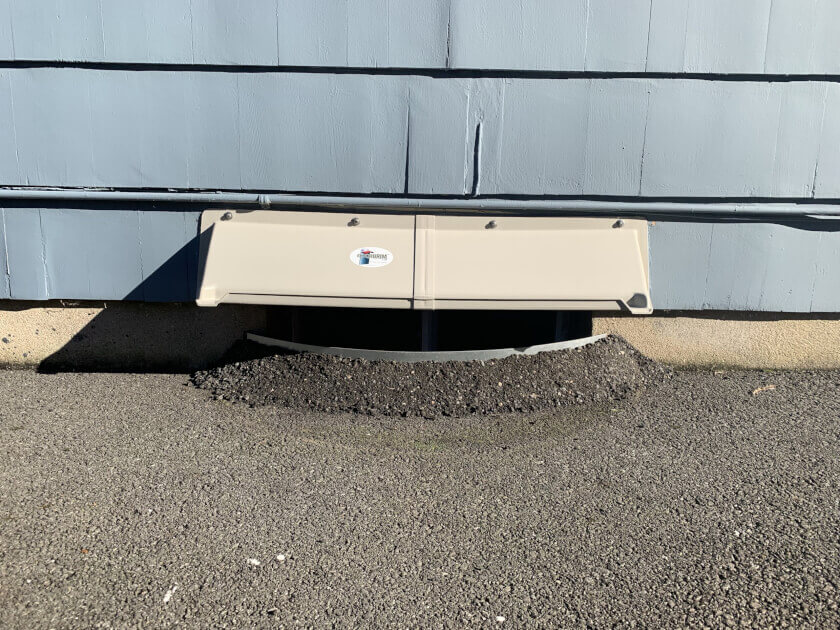
A leaking basement window usually does not start at the glass. It starts above it. When roof runoff, splashback, or wall-shedding water drops directly onto the top of the frame, it works its way into joints, cracks, trim gaps, and masonry edges. A basement window rain cover is designed to interrupt that path before water reaches the opening.
That sounds simple, but this is where many property owners lose time and money. They recaulk the frame, patch the well, or replace the window, only to find that the leak comes back during the next hard rain. If water is repeatedly striking the head of the window, the real problem is exposure. The fix needs to control the runoff, not just seal the symptoms.
What a basement window rain cover actually does
A proper rain cover extends out from the wall far enough to catch water before it lands on the window assembly. Just as important, it pushes that water away from the face of the wall instead of letting it track back toward the opening. The better designs do more than act like a small cap. They provide real projection and a defined path for drainage.
This matters most on basement windows because they sit in a vulnerable zone. They are lower on the wall, closer to splashback, and often surrounded by concrete, brick, stone, or corrugated well materials that can trap and redirect water. In many homes, the grade, downspout discharge, and roof line all combine to make that area wetter than the rest of the facade.
A basic drip edge can help in some cases, but it often does not project far enough to deal with concentrated runoff. That is the difference between a cosmetic add-on and a purpose-built water diverter. If the cover does not extend past the problem area and direct water away with control, it may reduce drips without stopping the leak.
Why basement windows leak even after caulking
Caulk has a role, but it is not a cure for active water loading. If rain is hitting the top of the window day after day, sealants are being asked to do too much. They break down, separate from dusty masonry, or fail where the wall surface is rough or uneven.
The same problem shows up with replacement windows. A new unit installed into the same wet conditions can leak just like the old one. Homeowners often assume the window itself is defective, when the real issue is that water is being driven onto the opening from above.
There is also the issue of water volume. A light drizzle is one thing. A hard storm with roof runoff pouring off a short overhang is another. Basement windows below valleys, near corner returns, or beneath second-story roof lines see far more water than people expect. In those cases, small flashing pieces and bead-after-bead of sealant are usually temporary measures.
The features that make a basement window rain cover effective
Projection is the first thing to look at. If the cover barely sticks out from the wall, it will not intercept enough water. The goal is to create meaningful separation between runoff and the top of the window.
The second feature is controlled drainage. A flat piece of metal can shed water, but it can also let it cling, wrap, and drip back. A rain cover with an integrated front gutter or formed diversion edge gives water a place to go. That is a major advantage when you are trying to stop repeat drips over the head of the frame.
Material matters too. Painted metal parts can rust, bend, or stain over time, especially in exposed conditions or near masonry that stays damp. A rust-proof ABS cover avoids corrosion and keeps maintenance low. For many property owners, that is the better long-term answer than thin metal flashing that was never designed to function as a true rain diverter.
Width is the last part people often miss. The cover should extend beyond both sides of the basement window, not stop right at the frame. That extra overlap helps capture water traveling down the wall and prevents edge runoff from simply finding a new way into the same opening.
How to size it correctly
The right size depends on the full exposure, not just the glass size. Start with the overall width of the window area you need to protect, including trim or any section where water is entering. Then add side overlap. If runoff is heavy, more overlap is usually better.
Projection should match the severity of the water problem. If you are only dealing with occasional drips, a modest extension may be enough. If the window sits under a concentrated runoff line or in a basement well where splashback is severe, go with more projection. Undersizing is one of the most common reasons a cover fails to solve the issue.
It also helps to look at the wall surface. Brick, stucco, ribbed metal, and uneven siding can change how the cover mounts and seals. On rough substrates, the product needs enough rigidity and enough mounting area to sit securely. That is one reason purpose-built covers tend to outperform improvised field fixes.
Where installation goes right and wrong
A basement window rain cover works best when mounted high enough above the opening to intercept runoff before it reaches the frame, but not so high that water can build speed and slip behind the protection zone. In most cases, the goal is close, direct coverage over the top of the window.
Fastening needs to match the wall. Masonry anchors for block or brick, appropriate screws for wood framing, and the correct hardware for metal buildings all matter. The attachment should be solid because a loose cover will flex, pull away from the wall, or lose its drainage angle.
Sealant has a supporting role here, not the starring role. It should help close minor mounting irregularities, especially on rough surfaces, but the product should still be doing the actual water diversion. If installation depends entirely on a thick bead of caulk, the setup is already compromised.
Another mistake is ignoring side conditions. If water is pouring in from a gutter above, a disconnected downspout, or bad grading that floods the well, the cover may help significantly but not fully solve the problem by itself. Sometimes the best result comes from combining a quality cover with a correction to runoff management nearby.
When a cover is the right fix, and when it is not
If the leak shows up during rain, gets worse in wind-driven storms, or leaves staining directly above the basement window, a cover is a strong candidate. The same goes for windows that stay wet long after the rest of the wall dries. Those are classic signs that water is being repeatedly delivered to the opening.
If water is rising from the sill because of a flooded window well, the solution may need drainage work first. If the wall itself has major structural cracks or the window was installed improperly with no head flashing behind the facade, surface protection may reduce exposure but not eliminate every path of intrusion.
That is the practical answer most contractors and facility managers want. A cover is highly effective when the main problem is direct water strike from above. It is not a substitute for correcting a failed foundation drain or a badly sloped landscape. Good leak control starts with identifying the actual path the water takes.
Why purpose-built covers beat makeshift solutions
People often try bent aluminum, spare flashing, plastic awnings, or site-built caps from whatever is on hand. Those can look reasonable on day one and still underperform in the first heavy storm. Usually the problem is not effort. It is geometry.
A makeshift piece may not project far enough, may not have a front drainage feature, or may stop short of the needed width. It might also corrode, oil-can, or mount poorly on uneven surfaces. For a problem area like a basement window, the product needs to do one job very well – catch runoff and push it away before it becomes a leak.
That is why purpose-built ABS diverters with real projection and integrated guttering continue to outperform traditional drip edges in the field. They are designed for exposure, not just appearance. For property owners trying to avoid mold, frame rot, interior damage, and repeat service calls, that difference is not minor.
A basement leak rarely gets cheaper by waiting. If rain is repeatedly hitting the top of your window, stopping the water path above the opening is usually the cleanest fix. Choose a basement window rain cover with enough projection, enough width, and a drainage design that actually redirects runoff, and you give that window a fighting chance in the next storm.
DOORBRIM rain diverters are an economical way to protect door and window openings without sufficient overhangs. Protect your doors, windows, jambs , trim and hardware from damage and leaks. Prevent costly repairs and replacements. Doorbrim rain diverters can stop leaks with a front gutter that divert water out and away from your structure.
DOORBRIM Benefits
- Our rain diverters are sized for a standard 36″ door or window, however custom sizes starting from 12 inches are available.
- Standard dimensions are 7 1/2″ high and 7 1/2″ deep. Additional specifications:
- UV protected colors are available in almond (off white), beige or gray.
- Easily painted any custom color with a common can of spray paint to match your structure or desire.
- Easy installation with ordinary tools.
- Optional fasteners for wood, masonry, brick, cement and stucco are available.
- Installation on rough or uneven surfaces are possible.
- Prevent costly and premature repairs.
- Discourages hidden mold by preventing water intrusion.
- Extends the life of doors, jambs and hardware.
Why buy the DOORBRIM brand?
Our awnings are superior to competitor metal flashings in several aspects. Unlike our competitors products made of steel, DOORBRIM awnings will never rust and will last a lifetime. A huge difference is the integrated front gutter. DOORBRIM awnings project a full 7 1/2″ away from the wall compared to small metal drip edges without front gutters. The front gutter will not only prevent dripping but will direct water out and away from building structures. Extend the life of your doors, windows and hardware with DOORBRIM awnings. A great alternative against expensive repairs and replacement, our awnings are easily installed with minimum tools. I am a prior property maintenance manager and realize firsthand the value in spending wisely. However, it will be prudent to consider that our products will also protect & preserve your doors, jambs & hardware for many additional years. You don’t have to wait for the inevitable deterioration and leaks from normal weather and UV rays. A DOORBRIM rain diverter is cheap insurance compared to a future repair and/or replacement.
We’re here to help!
DOORBRIM Services to help fix a Door Leak: If you’re experiencing window or door leaks, send us a few images and our staff will analyze your circumstances and offer our best recommendations. Make sure to include an image of the overall building showing the site, elevation and roof overhangs. We will make every effort to help you solve your problem and we don’t always recommend a DOORBRIM rain diverter.
Listen to Lou Manfredini praise the “Original DOORBRIM Rain Diverter” on his Mr. Fix-It Radio Show at WGN in Chicago.
Links To Useful Articles On The Proper Method Of Installation For Various Types Of Doors:
1) Flashing A Door Rough Opening Is A Very Important Step That Is Often Skipped When Installing A New Door.
A) This Method Demonstrates The Use Of A Modified Material To Construct A Pan On A Wood Subfloor.
See Video http://www.finehomebuilding.com/How-To/Video/Flash-Rough-Opening.aspx.
B) This Method Demonstrates The Use Of A Metal Pan On A Wood Subfloor. Installing French Doors – Journal Of Light Construction (FEB 2010).
2) We also Highly Recommend Using The New Composite Pre-Hung Doors With Integral Threshold Similar To The Endura Framesaver. The Bottom 8-12 inches Of These Frames Are Made Of Composite Wood Guaranteed For Life Against Termites And Rot. Check Out Their Videos. I Also Suggest Using Composite Or PVC Door Brick Moldings And A Pre-Made Sloped Sill Pan. ENDURA PRODUCTS

Share this:

Discover more from DOORBRIM Rain Diverters
Subscribe to get the latest posts sent to your email.
You must be logged in to post a comment.